



Watch a short video of an eighth grader who sees an antisemitic meme in a group chat and decides to speak up. Explore the Pyramid of Hate mini-lesson.
224 Results
BackThis animated video explores Jewish identity through religion, peoplehood and ethnicity, with 4,000 years of history for middle and high school educators.
This short ADL video gives educators strategies to support Jewish students, lead discussions on Jewish identity and respond to antisemitism and bias.
Meet ADL Ora, a free AI assistant giving K-12 educators expert-vetted resources to teach about antisemitism, the Holocaust and Jewish identity.
Learn a framework for using books to build empathy. This video supports ADL's Stories That Matter book kits for educators and parents.
This short video helps middle and high school students and educators spot antisemitic stereotypes and conspiracy theories hiding in images, memes and jokes.
This short video uses a tree metaphor to show how antisemitism grows and spreads. Designed for middle and high school students and educators.

Digital teaching kits for K-12 educators and families pair curated books with curriculum ideas to explore Jewish identity, the Holocaust and antisemitism.
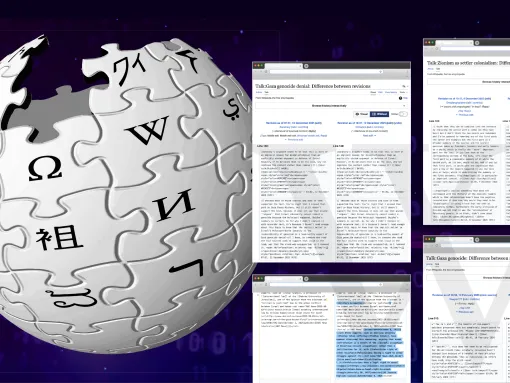
A year after ADL's "Editing for Hate," bias still shapes Wikipedia, and even banned editors' work remains unreviewed.

This report details the real human impact of some of the sites Cloudflare sustains and evaluates the systemic policy and enforcement gaps that allow them to remain operational.
ADL study finds popular open-source LLMs can easily be manipulated by malicious actors to produce antisemitic, extremist, and dangerous content amid weak safety guardrails.

Research by the ADL Center for Tech & Society (CTS) found that the term ‘false flag’ ranked as the second most popular term on Reddit in a sample of conversations about the antisemitic Boulder attack and the fifth most popular following the D.C. Capitol Jewish Museum attack.
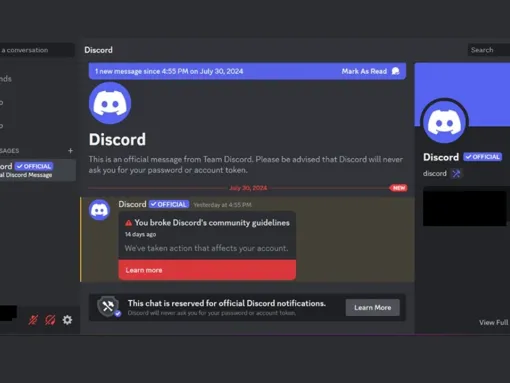
On social media and gaming platforms, hate and harassment thrive in closed online spaces, which lack the visibility and accountability of more open or public ones.

Artificial intelligence is rapidly reshaping how people consume and trust information—including what books they read. Amazon, the world’s largest bookseller, uses Large Language Models (LLMs) to generate short, snappy summaries of customer reviews. While this may be useful when applied to bedsheets or kitchen appliances, applying AI to book reviews—without human oversight—is proving to be deeply problematic. We found that AI-generated reviews are promoting books that…

Parents and caregivers: get steps and suggested language to raise concerns with teachers and schools about bias, misinformation and antisemitism in class.

Reflection questions and resources help educators teach about Israel and the Israeli-Palestinian conflict while challenging bias and keeping every student safe.

Co-produced with Builders For Tomorrow Executive SummaryADL research shows that four leading LLMs, particularly Llama, display bias against Jews and Israel. LLM bias in other areas has already been highlighted; this report provides the most comprehensive evaluation to date of anti-Jewish and anti-Israel bias in major LLMs—GPT (OpenAI), Claude (Anthropic), Gemini (Google), and Llama (Meta). In 2025 and beyond, the importance of large language model (LLM)…

Co-produced with Builders For Tomorrow Executive Summary ADL has identified extensive issues with antisemitic and anti-Israel bias on Wikipedia in multiple languages. These issues include 1) a coordinated campaign to manipulate Wikipedia content related to Israel, the Israeli-Palestinian conflict, and similar issues, in which a group of editors systematically evade Wikipedia’s rules to shift balanced narratives toward skewed ones, spotlighting criticism of Israel and downplaying…

by Dr. Kat Schrier, Professor and Director of Games & Emerging Media at Marist University 29 min read Executive Summary This report shows there was hate and harassment in about half of the online multiplayer game sessions that ADL asked a group of participants to play using a range of religious, ethnic, and national identities. Previous research by ADL and others has repeatedly suggested that online games are spaces where hate and harassment are rampant; we set out to…
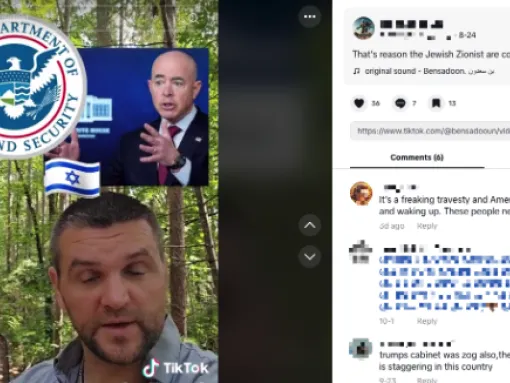
Executive summaryFalse and misleading election narratives are surging on social media platforms in the lead up to the US presidential election. Since 2022, at least three major platforms have weakened their rules against disseminating election misinformation. Of these, X/Twitter also appears to have rolled back enforcement against hateful election misinformation. Ahead of this election, a flood of narratives has surged rehashing antisemitic tropes and pushing anti-immigrant…