











Watch a short video of an eighth grader who sees an antisemitic meme in a group chat and decides to speak up. Explore the Pyramid of Hate mini-lesson.
44 Results
BackThis short ADL video gives educators strategies to support Jewish students, lead discussions on Jewish identity and respond to antisemitism and bias.
This short video helps middle and high school students and educators spot antisemitic stereotypes and conspiracy theories hiding in images, memes and jokes.
This short video uses a tree metaphor to show how antisemitism grows and spreads. Designed for middle and high school students and educators.

Digital teaching kits for K-12 educators and families pair curated books with curriculum ideas to explore Jewish identity, the Holocaust and antisemitism.

Examining antisemitism, exclusion and representation in higher education unions, and how stronger democratic practices can better serve all members.

Examining trends in faculty-driven antisemitism and how classroom practices, academic structures and institutional dynamics shape Jewish student experiences.
A data-driven look at anti-Jewish bias, attitudes towards Israel, and campus climate, with implications for universities and institutional action.

ADL examined the strategic evolution of anti-Israel activism on U.S. campuses and provides recommendations for universities to respond proactively to changing tactics.

Surveyed faculty report widespread antisemitism on campuses and in associations, with growing professional, emotional, and mental health impacts.

ADL’s RAI and CCAE found high rates of antisemitism in independent K-12 schools, especially within curricula, with insufficient response from administrators.

Parents and caregivers: get steps and suggested language to raise concerns with teachers and schools about bias, misinformation and antisemitism in class.
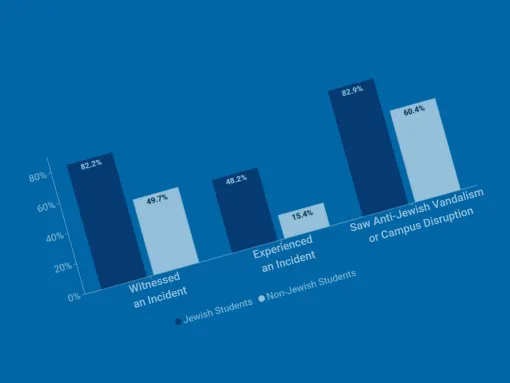
Most Jewish students face antisemitism; over 25% of Jewish students said they had observed anti-Jewish activity from faculty. Rates of self-censorship of Jewish identity and views of Israel remain high.
Educators can teach young people what antisemitism is, where it comes from and what it looks like today, so they can recognize and report it.

New research shows the Gringlas Unit effectively teaches students to recognize antisemitism as a recurring conspiracy theory, reducing belief in antisemitic tropes after just one lesson.
Join the ADL Innovation Lab and partner with ADL to equip students with digital literacy skills to combat online mis- and disinformation that lead to hate.
ProgramsUniversities increasingly rely on trainings for students, staff, faculty and administrators to address antisemitism and related forms of bias on campus. Whether a program is developed internally or delivered by an external provider, institutions benefit from taking a thoughtful, structured approach to reviewing content, pedagogy, and alignment with institutional values. The questions below are designed to support universities in evaluating whether a training is factually accurate,…

ADL's research and data on antisemitism provides a bridge between history, current events, and students' lived experiences. Explore the Global 100.

Don’t Feed the Lion: IntroductionDon’t Feed the Lion by Bianna Golodryga and Yonit Levi explores the story of antisemitism growing at Oakdale Middle School. The story begins with Theo Kaplan, a 13-year-old Chicago middle schooler and soccer captain. Theo’s world is turned upside down when his professional soccer idol, Wes Mitchell, makes an antisemitic comment that goes viral. The situation escalates when Theo discovers a swastika…

Resources to facilitate thoughtful conversations with your students about antisemitism, current events and violence, and how we build more communities that stand up to hate.